Latest News

Ashton Community gets Potable Water

Jamaica Gleaner Article

WESTERN BUREAU:

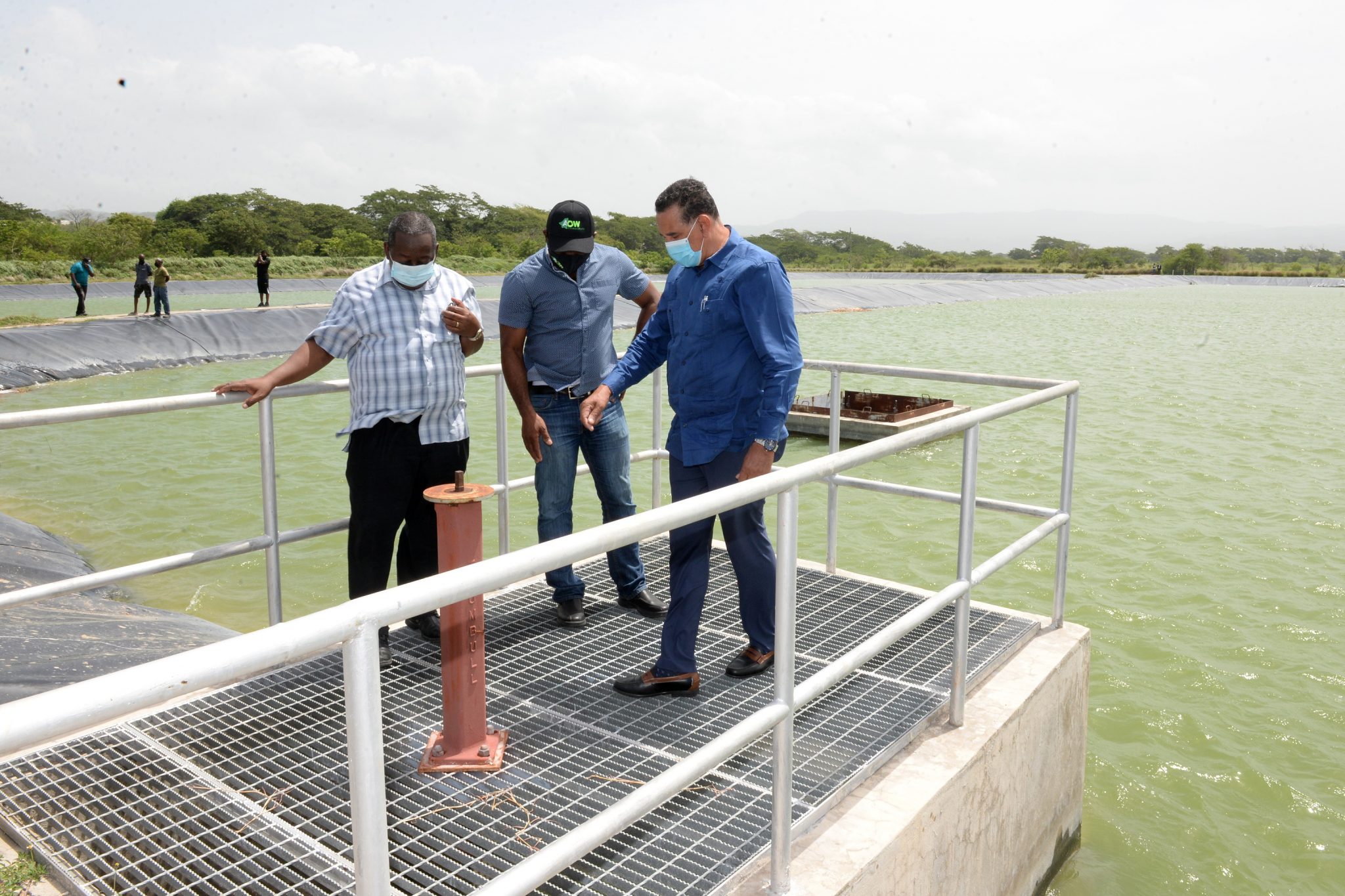
Residents of Ashton in eastern Westmoreland have welcomed the re-commissioning of the 50,000-gallon Ashton Catchment Tank, pointing to its overall value to several neighboring communities.

Notary public Jerome Darnels, one of the over 1,000 residents in the community, is hoping that it will be properly maintained so that the service will be long-lasting.

“It is beneficial that people have access to potable water. It is long overdue, and we just want to make sure that it is properly maintained, including (having) regular checks made to the facility to test the quality of the water,” Darnels told The Gleaner.

The Ashton Catchment Tank, which was out of service for several years, denying residents of Ashton, Dundee, and Ridge Mountain, a consistent supply of potable water, was recently restored at a cost of $10 million by the Rural Water Supply Company (RWSC). It was re-commissioned into service last week by Local Government Minister Desmond McKenzie.

“We committed to the residents in the area that we would move as quickly as possible to correct that situation. We are very proud of the contribution of Rural Water. They have brought a certain level of professionalism and I can tell you that we can rely on Rural Water to deliver,” said McKenzie.

SIMILAR PROJECTS
Audley Thompson, managing director of RWSC, said that with the re-commissioning of the tank, residents will now be provided with potable water through a set of standpipes.

“We did the necessary refurbishment and what was critical is that we laid approximately two kilometres of pipes and put in nine standpipes, so residents don’t have to walk all the distance to come up and get water. We are key on rural development, and we are one company that will ensure that most of rural Jamaica gets water.”

He gave further assurance that other communities across rural Jamaica which are without access to water from the National Water Commission (NWC) are also slated to benefit from similar projects.

“We are going to be expanding the role of Rural Water across the country in communities where there is no connectivity to the National Water Commission, and we must understand that it is not everywhere the NWC will go, but Rural Water can go, and will go.”

Fifty-six-year-old Desmond Vaccianna, who has been the caretaker at the catchment tank for over 25 years, expressed his relief that persons can now access potable water from the newly installed standpipe network.

“Having standpipes in the community is awesome … as it allows more people to access potable water closer to their homes,” said Vaccianna.

“I will make sure the facility remains clear of foreign matter and that it is properly treated with chlorine so that we can all enjoy clean-quality water.”


https://jamaica-gleaner.com/article/news/20230505/ashton-community-gets-potable-water
20,000 Gallon Tank Installed at Albert Town High

A Jamaica Gleaner Article

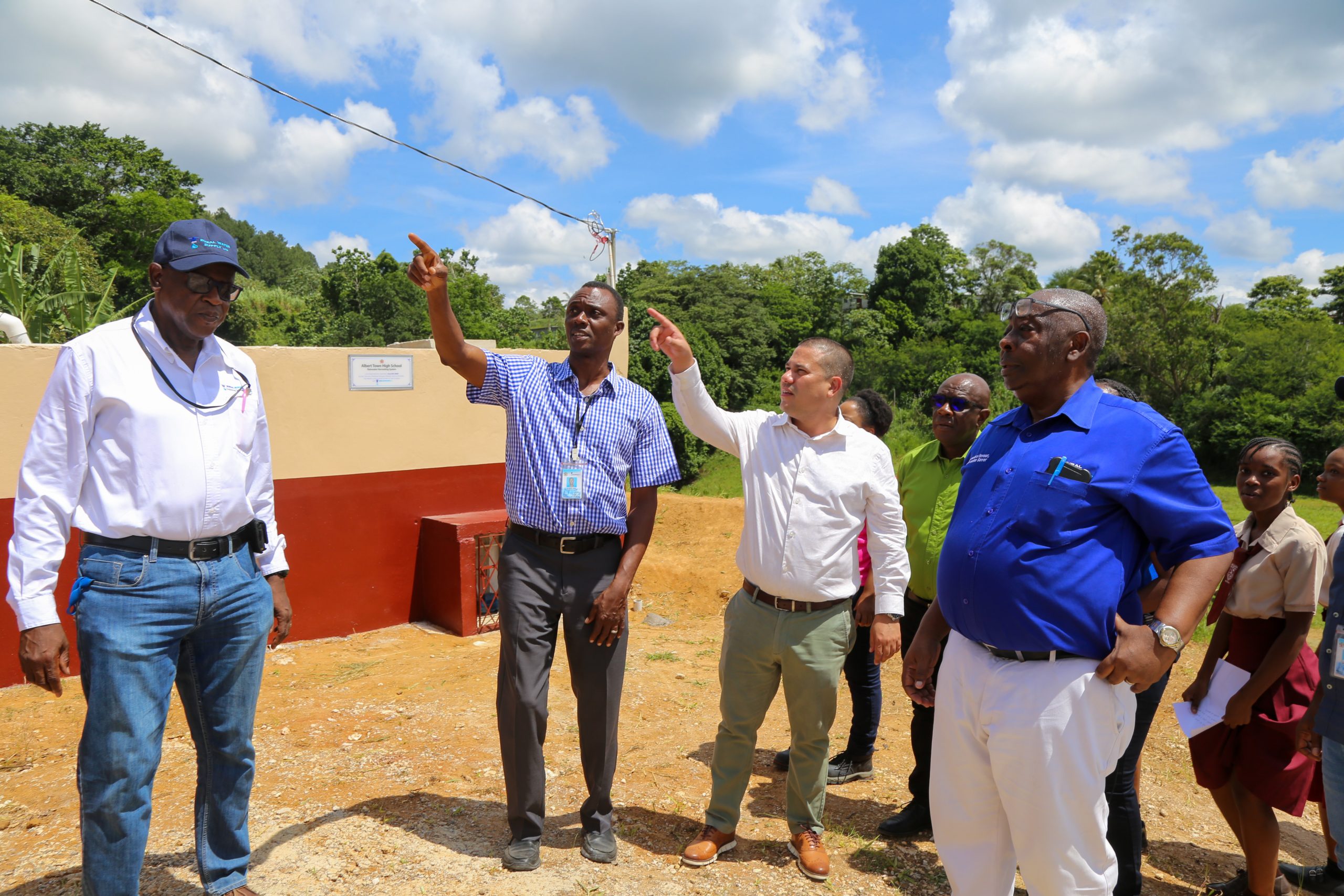
A new 20,000-gallon tank and various rainwater-harvesting mechanisms have been installed at Albert Town High School in Trelawny to address the longstanding water issues faced by the institution.

Senator Matthew Samuda, minister without portfolio in the Ministry of Economic Growth and Job Creation, officially commissioned the $4.5-million investment into service on Thursday.

The upgrade was spearheaded by Rural Water Supply Limited, which also laid 350 feet of pipe, installed guttering, and donated eight black tanks and a pumping system.

This project should serve more than 800 students, as well as teaching and ancillary staff at the school, where the water storage capacity has been increased to 50,000 gallons.

“We (Government) will make the investments in the capacity of water storage right across the length and breadth of this country, especially in rural schools, to ensure that not an hour of learning loss can be attributed to water supply,” said Samuda.

He emphasised the importance of investing in the water tank and harvesting system at the school, noting that it is an investment in “the future of this nation”. He also lauded the team from Rural Water for working around the clock to ensure that the project was properly executed.

“Today is a milestone because it reflects that the team from Rural Water has done something right. It has invested in the children and the future of Albert Town through this water investment in this space,” Samuda outlined.

“Also, the water policy unit at the ministry is working around the clock to ensure that what we have done here at the school level is going to now translate at the household level,” he added.

Janice Skeen-Miller, acting principal of Albert Town High School, explained that the addition of 20,000 gallons will alleviate the need to purchase water at $40,000 per load from Falmouth or Christiana, Manchester.

“I am very grateful for this initiative, and I am very confident that it will serve to benefit us as teachers and the student body. The teachers and students will use it and be grateful,” Skeen-Miller said.

Mayor of Falmouth Collen Gager said the valuable contribution will positively impact the lives of students and school staff, as projects of this nature hold significant value to rural communities.

“Thank you for giving us this great gift, we appreciate it,” he added.

Commissioning of the Watermount Water Supply

A  JIS News Article:

More than 7,000 residents in and around the Watermount area of St. Catherine now have access to potable water from the $220-million upgraded system.

The communities being served by the Watermount Water Supply System are Mendez, Back Pasture, Cudjoe’s Hill, Old Works, Watermount, Barry and Pedro. It was developed by the Rural Water Supply Limited (RWSL).

The St. Catherine Municipal Corporation, which will now operate the system, had initiated work on the project.

At the recent commissioning ceremony, Minister of Local Government and Rural Development, Hon. Desmond McKenzie, in praising the work of the RWSL said it is making a sterling effort to provide communities with durable water systems.

“It is the commitment of the Government to ensure that this basic and important commodity is available to all Jamaicans,” Mr. McKenzie said.

Water is sourced from the William Gully Dam, with new transmission and distribution lines installed and construction of a storage tank and pump station.

Member of Parliament for St. Catherine West Central, Dr. the Hon. Christopher Tufton, said collaboration has worked for the beneficiaries of the project.

While noting the collaboration among the various agencies to complete the system, Dr. Tufton said a lot of “energies were put into delivering the project”.

“It is timely, and I am grateful for the people,” he told the ceremony, adding that given the drought that is now affecting the island, people should be extra careful in how they use water.

For his part, Mayor of Spanish Town, Councillor Norman Scott, said the building of the system is a clear indication that the Corporat6ion is resolved to give communities clean, potable and safe water at all times.

He emphasised that it is an investment that the residents must pay for, because if they do not pay their bills regularly, “we won’t be able to keep the system functional”.

Managing Director of the RWSL, Audley Thompson, told the gathering that it was a costly undertaking to develop the facility, and that the water is for “your domestic use”, and there should be no massive watering of fields.

“That wasn’t what the system was designed for, so you need to take care of it,” Mr. Thompson said.

For Principal of the Watermount Primary and Infant School, Karlene Thomas-Laing, it was a moment longed for by many community members, as on occasions inadequate supply of water affected classes at the institution.

“Thank God, this is only a memory,” she said, adding that the institution is now in a better position to care for the children.


Billion-Dollar Water System In St Catherine

A JIS NEWS ARTICLE

The Government is examining the feasibility of replicating the underground water recharge system to Manchester and St. Elizabeth, in similar fashion to the system at Innswood, St. Catherine.

Making the disclosure following a tour of the system in St. Catherine, yesterday, Wednesday (March 16), Minister of Local Government and Rural Development, Hon. Desmond McKenzie, said the two parishes account for a “significant portion” of foods produced across the island, and water is critical for production.

“Water is critical, and forms part of the government agenda… and St. Catherine possesses the capacity to provide water,” the Minister said.

The St. Catherine facility is situated on 68 acres of land located at Innswood, and its main function is to divert approximately five million gallons of water per day from the Rio Cobre River through the National Irrigation Commission (NIC) Canal during the wet season.

After the water is extracted from the canal, it is settled and injected into limestone wells to recharge the limestone aquifer, and to replenish the abstractions from wells into the Portmore/Bernard Lodge area.

The system was built at a cost of $1.1 billion with financing from the Inter-American Development Bank (IDB) and is operated by the Rural Water Supply Limited (RWSL). Mr. McKenzie said he had an “eye opener” that Jamaica can generate the water that is needed, but it must be done in a structured manner.

He further said the ministry’s technical team will be engaged to see “how best” the system can be expanded, and that he will use his upcoming Sectoral Budget Debate in April to outline the “join up” approach that the Government is taking to expand water systems across the island.

“It is a commitment that we made in 2016 and have been fulfilling, and we will continue to fulfil, because if you want to grow and stimulate employment, then water has to be a driving force,” the Minister said.

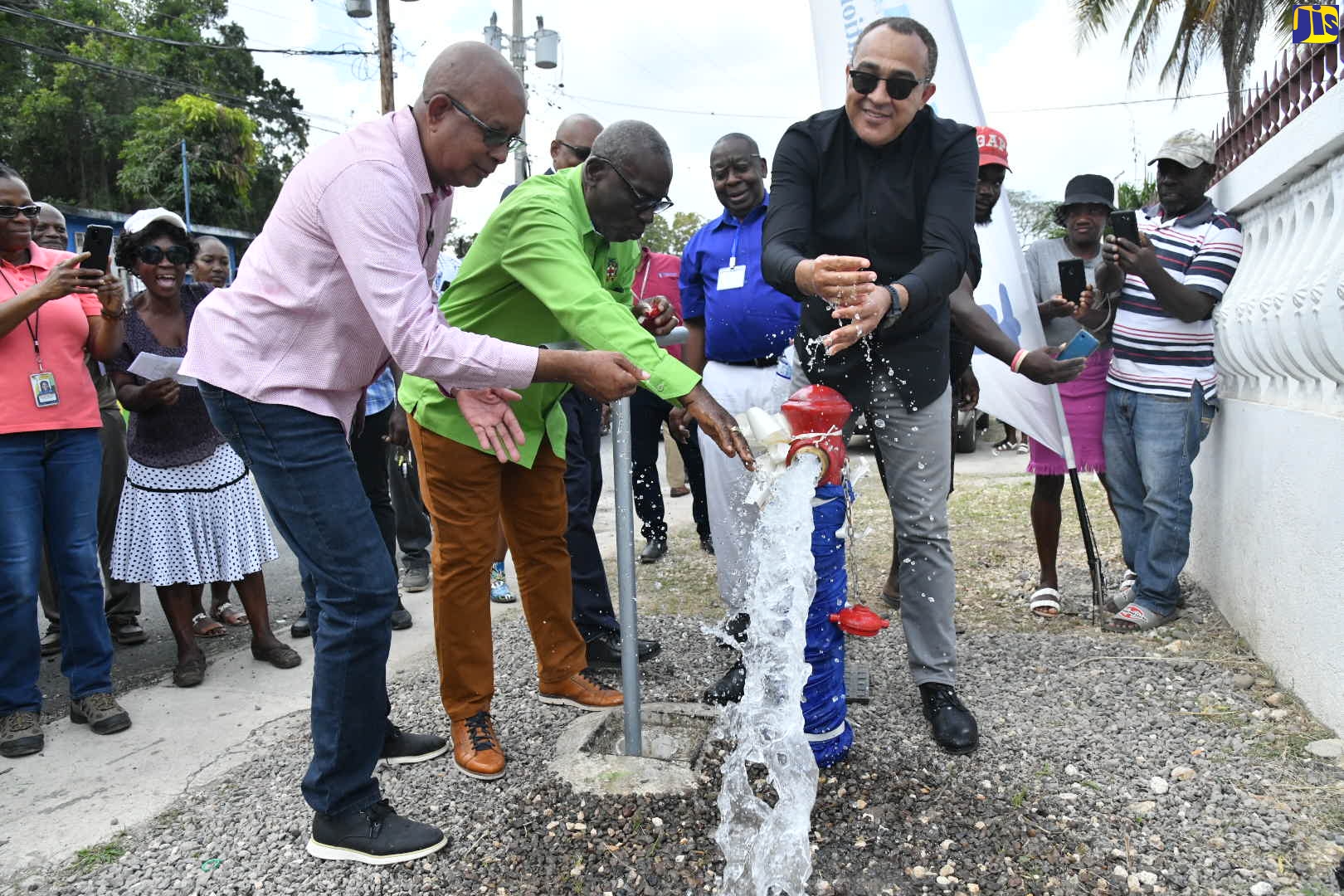
Aberdeen Residents Get New Hybrid Pumping Station

Jamaica Observer Article:


MORE than 1,600 residents in Aberdeen, St Elizabeth, are now set to benefit from the development of a new state-of-the-art water pumping station.

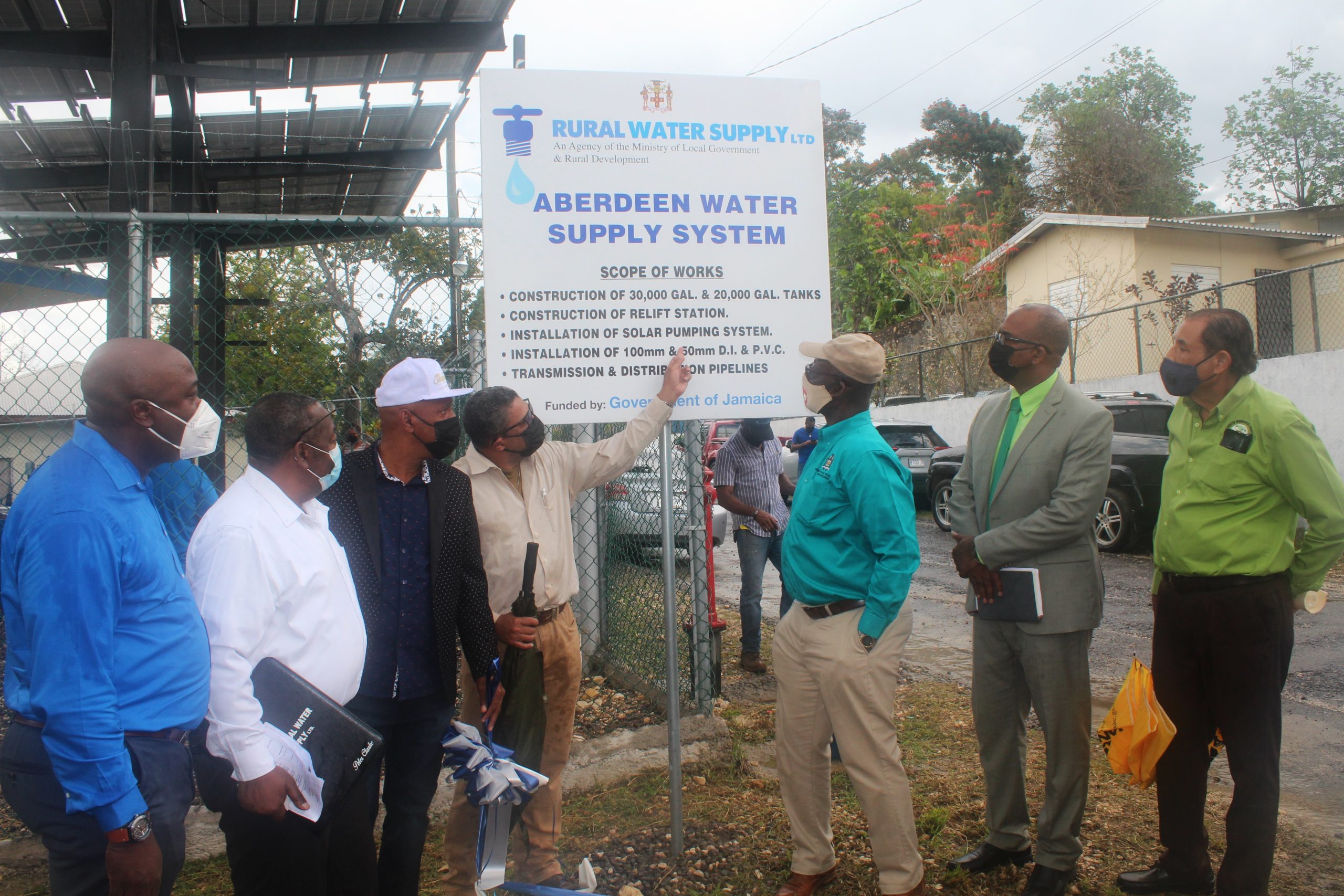
Work for the facility was executed by Rural Water Supply Limited and is set to provide residents with more than 80,000 gallons of potable water on a daily basis.

Minister of Local Government and Rural Development Desmond McKenzie, who commissioned the new station, called the development a “first”.

“This is a historical day because it is the first hybrid and largest solar pumping station in the country. This is a first so it has significance, and a community of over sixteen hundred persons and its environs will benefit significantly from this,” Minister McKenzie said.


The $110-million project saw the construction of the pumping station being inclusive of solar power generation that works in conjunction with power from the country’s main utility provider, JPS; two storage tanks with a combined capacity of 50,000 gallons; and the installation of new distribution and transmission pipelines.


The pumping station, which will be managed by National Water Commission, was welcomed by residents who braved the rain to watch the ceremonial opening of the facility. They shared that prior to this development they would have to depend on the rain or buy water from trucks.

“I think it’s a good thing and I’m very grateful for it, for the water. Yeah, we are grateful and glad for it,” said Taskia Martin.

McKenzie urged the residents and the municipal corporation to protect the investment.

“This project must be protected for the benefit of the people because the people have suffered for too long,” he said.

He also urged residents to pay their bills, highlighting that the water isn’t free and its provision comes at a cost.

Meanwhile, Member of Parliament for St Elizabeth North Eastern, Delroy Slowley declared that he will be providing the first 50 applicants for the service with half of their connection fee.


“In making sure that a number of persons get on the system, what I have done on my own initiative is to offer 50 per cent partnership with the first 50 persons that connect to the system, because we really want to encourage persons to connect properly. This is a huge outlay of capital cost and we have to have proper return on investment,” the MP said.


After the 2020 General Election Rural Water Supply Limited was placed under the purview of the local government ministry, and McKenzie shared that there is more work to come.

“This project is an important one. The component of the work that is scheduled for this year under rural development will total over some $325 million that has been allocated to bring water to six parishes — St Catherine, St Ann, Clarendon, St Elizabeth, Portland, and St James,” he said.

This, he explained, forms part of a greater plan to provide water to the 27 per cent of Jamaicans who still have no access to the commodity.

Rural Water Supply Limited Commended For Project At Springfield Primary School

Minister of Local Government and Rural Development, Hon. Desmond McKenzie, has commended Rural Water Supply Limited (RWSL) for their rainwater-harvesting project, which was recently implemented at the Springfield Primary and Infant School in St. Elizabeth.

After a tour of the institution recently, Mr. McKenzie told journalists that “water harvesting has been a feature of the Ministry since 2016 and RWSL coming into the Ministry has strengthened the capacity of the Ministry to deliver”.

“They are a bunch of professionals, seasoned professionals, who have brought a level of performance to the Ministry of Local Government. They have lifted the standard in terms of service delivery, and I am looking forward to working with them right across Jamaica to take projects such as this and many more to communities across the country that are in need of water,” he said.

Mr. McKenzie further noted that RWSL is an important component of the Government’s response to communities across Jamaica with limited access to adequate potable water.

The Minister stated that the water harvesting project at the school will ensure that students attend more consistently.

“We are not just working in communities but we are in schools, and it is good to know that the introduction of water harvesting in this school will allow a consistent stream of attendance by the students,” he said.

The project, which was undertaken last year by the RWSL, includes the installation of five tanks at Springfield Primary, two 1,000-gallon tanks, two 800-gallon tanks and one 15,000-gallon concrete tank.

Mr. McKenzie said there is no doubt that the investment will be protected, as the school is in great condition.

For his part, Mayor of Black River, Councillor Derrick Sangster, thanked the Ministry and RWSL for the project’s implementation.

“What the RWSL has done is to make it possible that this institution will always have available to them a collection of clean potable water, so that the health of the children here can be protected, and they will all be able to exist in a clean and healthy environment,” Councillor Sangster said.

Managing Director of RWSL, Audley Thompson, noted that “it is a pleasure for RWSL to have participated in something like this”.

“This is something that we do all over the island. To date, we have placed about 60 of these [projects] all over the island,” he noted.

Principal of Springfield Primary and Infant School, Winsome Coke, said she is “elated” with the project, and thanked RWSL for their execution of the project at the school.

The initiative will benefit some 162 students and staff at the institution.

-JIS News

Little Bay Primary and Infant School

A laundromat is to be established at Little Bay Primary and Infant School in Westmoreland to assist students in washing their uniforms and other articles of clothing.

This is being done against the background of water challenges impacting the community.

Principal, Keron King, told JIS News that the facility is being funded by longstanding donor partner, the UZAZI Foundation, which is based in Canada.

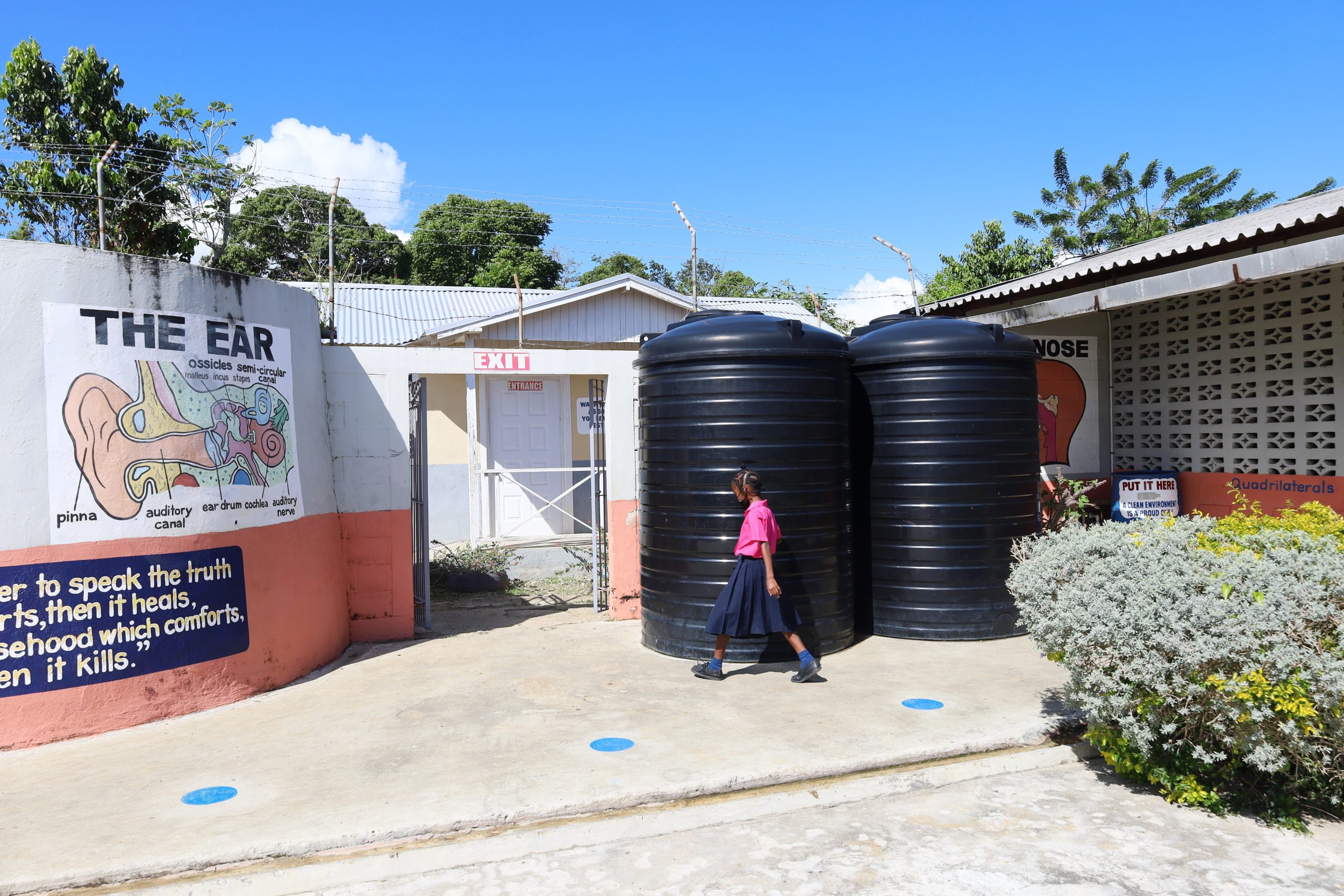
The facility is to be housed in the school’s reading room and will be provided with water from a 20,000-gallon tank that was recently installed at the institution by Rural Water Supply Limited (RWSL).

“We realised that there is no running water [in the community], and sometimes the children will complain about not getting their uniforms washed on time. So, as part of caring for our students and looking at things from a holistic point of view, we [decided] to set up a laundromat so the children can take their uniforms in, get them washed and ironed, and get their regular clothes washed here as well,” King informed.


He thanked the UZAZI Foundation for funding the laundromat’s establishment, noting that this is expected to aid in significantly building the students’ self-esteem.

“The washing machine and dryer are on their way to Jamaica; in a matter of weeks, they are going to be here. So, [for that] we are very thankful and appreciative,” he added.

King said the students and parents are “very excited” about the laundromat, noting they have queried whether the facility’s use can be extended to the wider community.

“We are looking at, first of all, serving our own children, and beyond that, we will [seek to] extend [the gesture] to the community,” he indicated.

The principal also expressed gratitude to RWSL for installing the tank, noting that as it has cut the institution’s water budget by approximately 90 percent.

King pointed out that the tank also enables the school to provide the children with drinking water and cater to the youngsters’ other needs.

He said it is anticipated that the tank will also serve to assist to the rest of the community, “in the event that we have a crisis.”

In their quest to become self-sufficient, the school has installed a generator-powered irrigation system that helps to water the institution’s garden and supply some areas of the campus with the amenity.

The garden supplies produces such as callaloo, pak choi and pumpkin, for the cafeteria which, coupled with chickens reared for eggs and poultry meat, supplements the breakfast programme.

Approximately 80 percent of the students benefit from the programme when school is in session.

King emphasised that the school continues to take the holistic development of its students seriously, as it continues its thrust to ensure that “all the needs of our students are catered to.”

– JIS News


Artificial Underground Recharge System Tour

JIS News

State Minister in the Ministry of Local Government and Rural Development, Hon. Homer Davis, says a plan is being looked at to establish an underground water recharge system in Clarendon.

The State Minister, who toured the Rural Water Supply Limited (RWSL) Artificial Underground Recharge System in Innswood, St. Catherine, on July 13, said the system will boost supply of the commodity in Clarendon.

“This is a very successful project, and we are looking at Clarendon to see if such a system can be replicated there,” Mr. Davis told journalists.

“It is a very potent project, serving a wide area, and it is part of a national policy to enhance the quality of life for people,” he added.

The St. Catherine facility is situated on 68 acres of land, and its main function is to divert approximately five million gallons of water per day from the Rio Cobre river through the National Irrigation Commission (NIC) canal during the wet season.

After the water is extracted from the canal, it is settled and injected into limestone wells to recharge the limestone aquifer, and to replenish the abstractions from wells in the Portmore/Bernard Lodge area.

“It is important that we have these wells being recharged, to ensure easy access to potable water, and we are also encouraging citizens to have the necessary storage capacity to deal with rainwater harvesting. We have to look at various measures to put us in a better position,” he said.

The system was built at a cost of $1.1 billion, with financing from the Inter-American Development Bank (IDB).

The State Minister lauded the RWSL team for their management of the system.

Meanwhile, Mr. Davis said there are springs across the island that never go dry, and “we are looking at these springs, doing the measurement, in consultation with the WRA (Water Resources Authority), to see how much we can extract from these systems to benefit the people”.

Government Launches Water Monitoring Initiative In Schools

Minister without Portfolio in the Ministry of Economic Growth and Job Creation, Senator the Hon. Pearnel Charles Jr. (left), pins Water Monitor at the Rock Hall All Age School, Alecia Waugh (2nd right), at the launch of a water monitoring initiative, called ‘Water IQ Initiative’, or ‘WiQi’, at the St. Andrew West Rural educational institution. Shanakaye Morgan (rght), and other Monitors observe.

To advance the culture of water conservation, the Government has launched a water monitoring initiative among primary and high school students.

Under the programme, called ‘Water IQ Initiative’, or ‘WiQi’, the Ministry of Economic Growth and Job Creation, Rural Water Supply Limited (RWSL), National Water Commission (NWC), and the Water Resources Authority (WRA), are collaborating with 11 schools initially, that have been retrofitted with water harvesting systems.

The programme will eventually reach 200 schools to foster sustainability of the initiative, with the assignment of at least 12 monitors in each institution, aided by a teacher or the administrative staff. All the monitors will be trained by the agencies.

“The role of the Water Monitors and the Coordinator will be to ensure that the school continues to develop proper water conservation strategies among the entire student body, while simultaneously developing initiatives to raise awareness within the school,” Minister without Portfolio in the Ministry, Senator the Hon. Pearnel Charles Jr., said at the recent launch of the programme, at the Rock Hall All Age School, in St. Andrew.

He explained that ‘WiQi’, which is supported by the Ministry of Education, Youth and Information, is targeting schools, as they are “critical” in the society for the moulding of the minds.”

The Minister said that schools are among the largest consumers of water, and if “we are to change behaviour in a sustainable way, we must start with our children.”

According to Senator Charles Jr., the programme is seeking to “activate” children for a good cause, not just when they are at school, but also in their homes, to build a firm platform for “water security.”

“The children have a huge responsibility, not just for their school, but for their homes and for the future of our country. If change is to come, it must be preceded by a change in our overall mindset, to ensure that the world that our children are to inherit will be one without the problems that we face today,” the Minister said.

Senator Charles Jr. said the initiative will allow teachers and students to be standard bearers, as the Government is ensuring that as it puts in water infrastructure, promotion is done to encourage behaviour change in the schools, in the home, and across communities.

Meanwhile, Principal of the Rock Hall All Age School, Paula Plummer, told JIS News that the programme “is awesome, as it will help students with their leadership skills, and their own sense of purpose and importance.”

Minister without Portfolio in the Ministry of Economic Growth and Job Creation, Senator the Hon. Pearnel Charles Jr. (4th left, back row), with the St. Andrew West Rural based Rock Hall All Age School Water Monitors, at the launch of the programme, called ‘Water IQ Initiative’, or ‘WiQi’, at the school, recently. Also with the Monitors (from left, back row) are: Managing Director of the Rural Water Supply Limited (RWSL), Audley Thompson; Principal of the school, Paula Plummer; Member of Parliament for West Rural St. Andrew, Juliet Cuthbert-Flynn; Chairman of the RWSL, Councillor Homer Davis, who is also Mayor of Montego Bay; Education Officer at the Ministry of Education, Youth and Information, Latoya Johnson; and Managing Director of the Water Resources Authority (WRA), Peter Clarke.


For her part, Water Monitor at the school, Gari-Anna McKenzie, said the role is a welcomed one for her. “I feel very happy, because I will be able to help others, and tell them how to use water, and what conservation means.”

Another student, Amaire Sinclair, said he too is proud to take on the responsibility of ensuring that his peers understand their role in preserving water for the benefit of all.

For Managing Director of the WRA, Peter Clarke, preservation must be preached, and “when we educate the children about the water resources, we are educating them about monitoring, managing it, and we are building a future of persons who will have the mindset that water is a precious commodity, and it must be preserved.”